3 Simple Notion Business Systems You Can Build Right Now
I’ve always been a little overwhelmed by all the freelance and agency OS templates that I see on Notion. I've tried my best to build from existing ones, but nothing ever clicked.
And I know I’m not alone because I literally just received the same message on LinkedIn the other day:
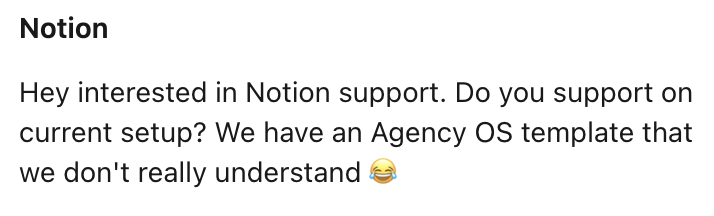
Message I received over LinkedIn the other day
If you’re an agency, business, or solo operator — chances are you had the same experience as me and this prospect.
So to ease in the Notion ecosystem, let me share with you some simple systems I’ve implemented over the past months that have been invaluable to my workflow and business management.
Daily Sales Report
Ever looked at your revenue and still had no idea which product was actually worth your time?
You're making sales, but the numbers are scattered, the margins are unclear, and every platform tells you something different. That was me.
And the fix wasn't a fancier tool or a more expensive subscription. It was a simple daily reporting system built right inside Notion that finally gave me the full picture.
Why I built this:
Notion has a peculiar system when downloading sales.
Basically, you’d have to download the CSV file or access it directly from your Stripe dashboard which had its own barriers. Because of that, I figured it was high time to build a sales report dashboard that pulled the numbers I needed directly from that CSV file.
Insights:
This template has been invaluable for building supporting numbers for strategic decisions. It’s given me insight into which templates are getting the most traffic, and their correlation to price.
When I first built this around January, this convinced me to pull most of my paid products out of Gumroad because the fees were just too high, especially for lower ticket products. Back then, there was enough volume to do the switch.
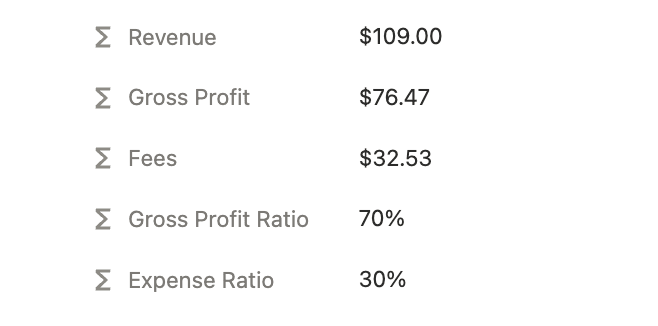
Here, you can see a 30% expense ratio based on the sales for that day.
When I dug into the numbers, I realized it was because I was selling most of my paid templates on Gumroad.
But as a testament to the relevance of this template, this actually made me realize that February is a different month altogether with lower paid volume but higher traffic for my free products.
So given that shift, I went back to a Gumroad redirect for most of my products so I can take advantage of the marketing tools that are built into the platform.
Currently, I’m not using this as often because I don’t have to track the paid traffic anymore but when volume picks up — I will probably switch back the main platform to Marketplace.
My Process:
Daily, I download my sales from the Notion Marketplace (and some from Gumroad if they are paid) and paste it directly to the automatically generated daily report from the template.
Weekly & monthly, I review the numbers (auto-computed by formulas) and see if there are any trends or patterns to look into.
As needed, I consult the numbers from this dashboard to build a full picture for my strategic ideas.
Funnel Checkup
One of the biggest traps early stage businesses fall into is that they don’t have structure for understanding what models work best for their business.
You're creating content, putting out offers, growing a list — but the offer is unstructured at best, all over the place at worst. A funnel checkup is how you stop guessing. It's a short, periodic review of your entire marketing and sales flow — from first touch to conversion — so you can see exactly where people are dropping off and what's actually moving the needle.
Why I built this:
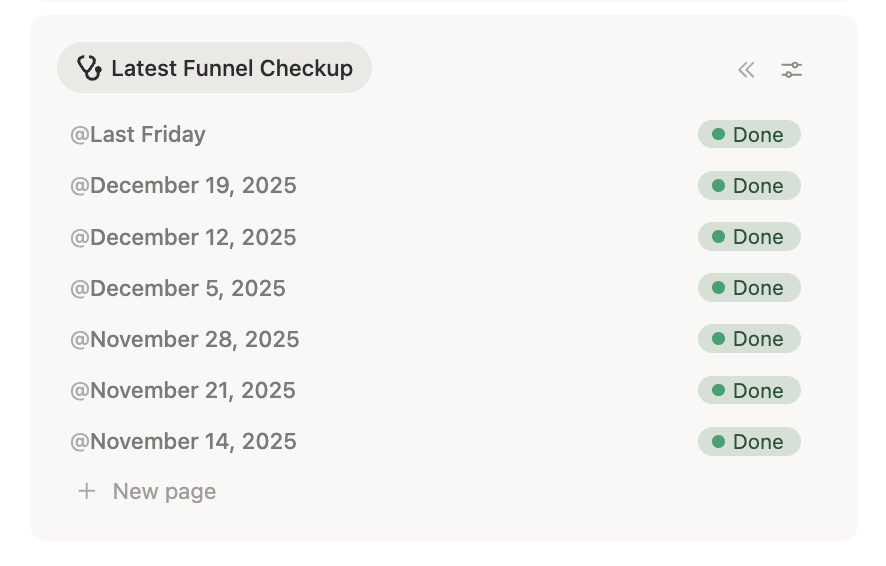
I revived this account around November 2025 and didn’t know where to take it.
I had templates and I also had a consultancy offer. I knew I couldn’t do custom templates because they were just too high investment, but even with just two options — the marketing for both is vastly different.
I initially pushed for the consultancy offer because the cashflow was a lot faster.
But over time, I’ve realized – the scheduling of consultations becomes really difficult given my schedule and travel commitments. So, I had to build a reference for the bottlenecks I come across testing new models or formats.
What is a funnel?
If you’re new to marketing or any business, a funnel is essentially a marketing tool that guides the customer or client through the buying process. Sales wisdom says a customer needs to have around seven touch points before a purchase, and this is the organizational way of creating that pathway.
The simplest pathway of this (and the one I used to follow for consultancy) is:
Lead Magnet → Newsletter → Sale / Conversion → Upsell
But because I’ve re-optimized my funnel for more consultancy-based work, it looks more like:
Free Templates (+ Follow) → Social Media Marketing → Paid Templates
If this is a new concept to you, try mapping out the funnel for your business then, build the template.
What’s a funnel checkup?
Now that we're clear on what a funnel is, here's where the checkup comes in.
A funnel checkup is a periodic review of how each part of the funnel is faring. This is to see where the bottlenecks lie when it comes to conversion.
What you want to do is to take some minutes (even maybe an hour) of the week to just reflect on your business marketing and sales funnel, and quantify what those stats mean for you.
Insights:
This is what helped me reposition my brand from a consultancy to a more low-ticket templates-based brand. This was essentially the big picture strategy driver that the daily sales report helped build for me.
If you’ve been around for a while, you might’ve been witness to the different pivots behind my brand. This was essentially the big driver of those changes over time.
Early into building, I would have a funnel checkup on a weekly basis. But now that I have an idea of the cadence and momentum that I can build, I’m just doing this monthly.
My Current Process:
Monthly, I review my write-up from the previous period. Then, I reflect on my offer and the current week's funnel from capture → nurturing → conversion. Once that's set, I write down potential solutions + the game plan for the next week.
Whenever necessary, I look at the numbers I've had over the past weeks and strategize around the patterns. If I’m not seeing revenue, I’m automatically positioned to make movements.
Work Log
Still figuring out what your business should look like day to day?
This system won't hand you a roadmap, but it will hold up a mirror. The idea is to log everything you're doing for the business, then use Notion AI to assess it. What are the recurring themes? Where are the gaps? Over time, the log does the thinking for you.
Why I built this:
Coming from that kick-off point of not knowing where my brand is going, I figured the best way to find direction is to track my steps. Hence, I would just write down what I’ve actually done whenever I would do work for this brand.
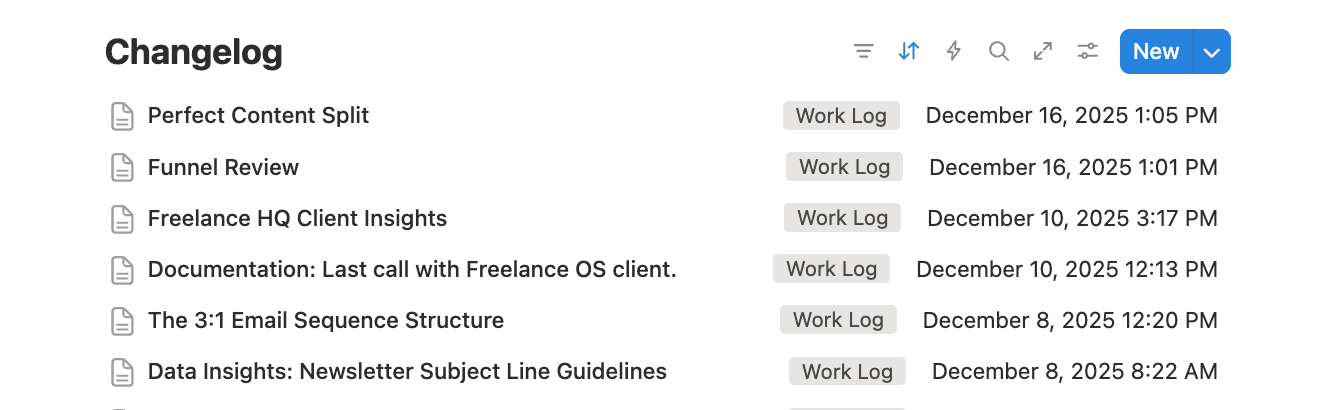
Weekly, I would prompt Notion AI to assess my work log and check for any gaps in my decision making or strategy building. Having this roadmap helped me figure out the foundations and the pathways available to me.
In a way, this is a journaling practice — but for work.
Insights:
Like I mentioned, I started this when I was trying to get back on my feet with this account. It’s helped me establish some foundations without the influence of profitability as a yardstick.
At one point, I thought I already had a grasp of what I wanted to do with this brand, and stopped the practice with a more standardized template with “essential questions”. But that proved to be overwhelming and a little too similar to my funnel checkup process.
So I’m coming back to this practice — but with analog first so that the workspace doesn’t get too messy with all these runaway thoughts.
My Process:
Every time I'm working, I just log my work into this database and tag it with what I think it applies to (Work Log, Insights, Milestones, etc.)
Weekly, I go over this log and use Notion AI to give me feedback and insights on patterns, philosophies, and ideas that have come out of those work logs. This also informs the funnel checkup I've shared earlier.
Final Notes
Everyone's business will look different, so I try not to give a comprehensive prescription (a la template) for something so customized….or at least not yet. 😂
But if you should take anything from this, it’s that you should get to know your business first before committing to managing it with an external platform like Notion.
Personally, long-term simple systems and Notion AI (accessible with the business plan) have been some of the best investments I’ve had for this brand that I manage alongside a career in marketing.
If you’re building a business behind a startup, you can get a free Notion business plan (which gives you access to Notion AI) for up to six months if you use my affiliate link.