The 1-Hour Portfolio
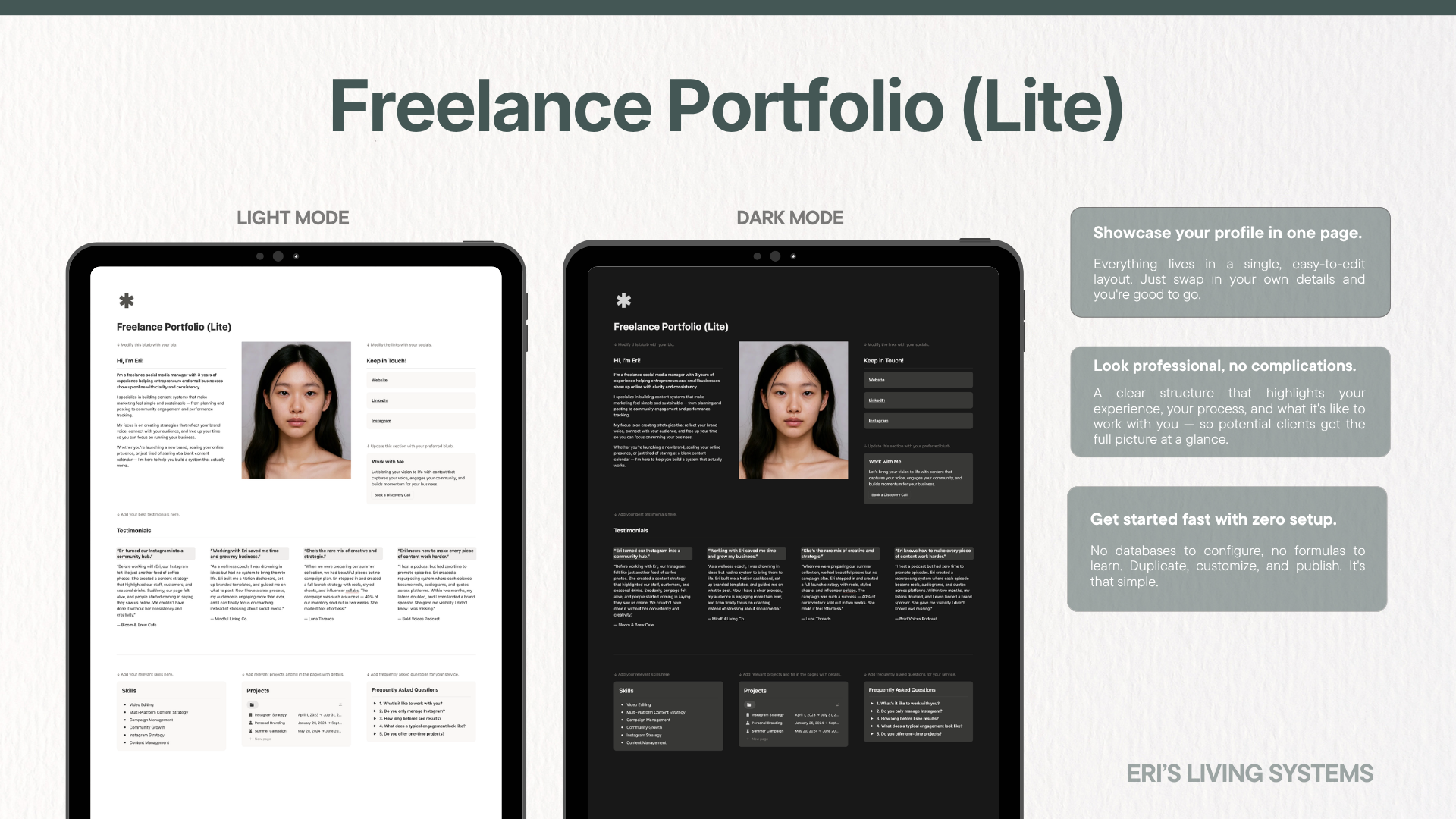
Freelance Portfolio (Lite) Overview
You've done the work. Real work. Good work.
You have projects you're proud of, clients who've raved about you, and a track record that speaks for itself. The problem isn't your experience. It's that none of it lives in one place where a potential client can actually see it.
Right now, when someone asks for your portfolio, what do you send? A Google Drive folder? A few links scattered across an email? A website you built three years ago that doesn't reflect where you are today?
If any of that sounds familiar, you're not alone, and the fix is simpler than you think.
Why "I'll set up a proper portfolio later" is costing you clients right now
Here's something worth sitting with: clients make decisions fast.
When someone finds you (whether through a referral, LinkedIn, or a cold email), they're usually vetting two or three freelancers at the same time. The one with a clean, clear portfolio that communicates their value immediately has a significant edge. It's easier to say yes to someone whose work and process you can see at a glance.
You've already done the hard part. You have the experience. What's missing is a single home for it.
What a portfolio that actually wins clients needs to include
Forget the elaborate case studies. Forget the custom-coded website. A portfolio that turns curious visitors into real inquiries needs to answer four questions, fast.
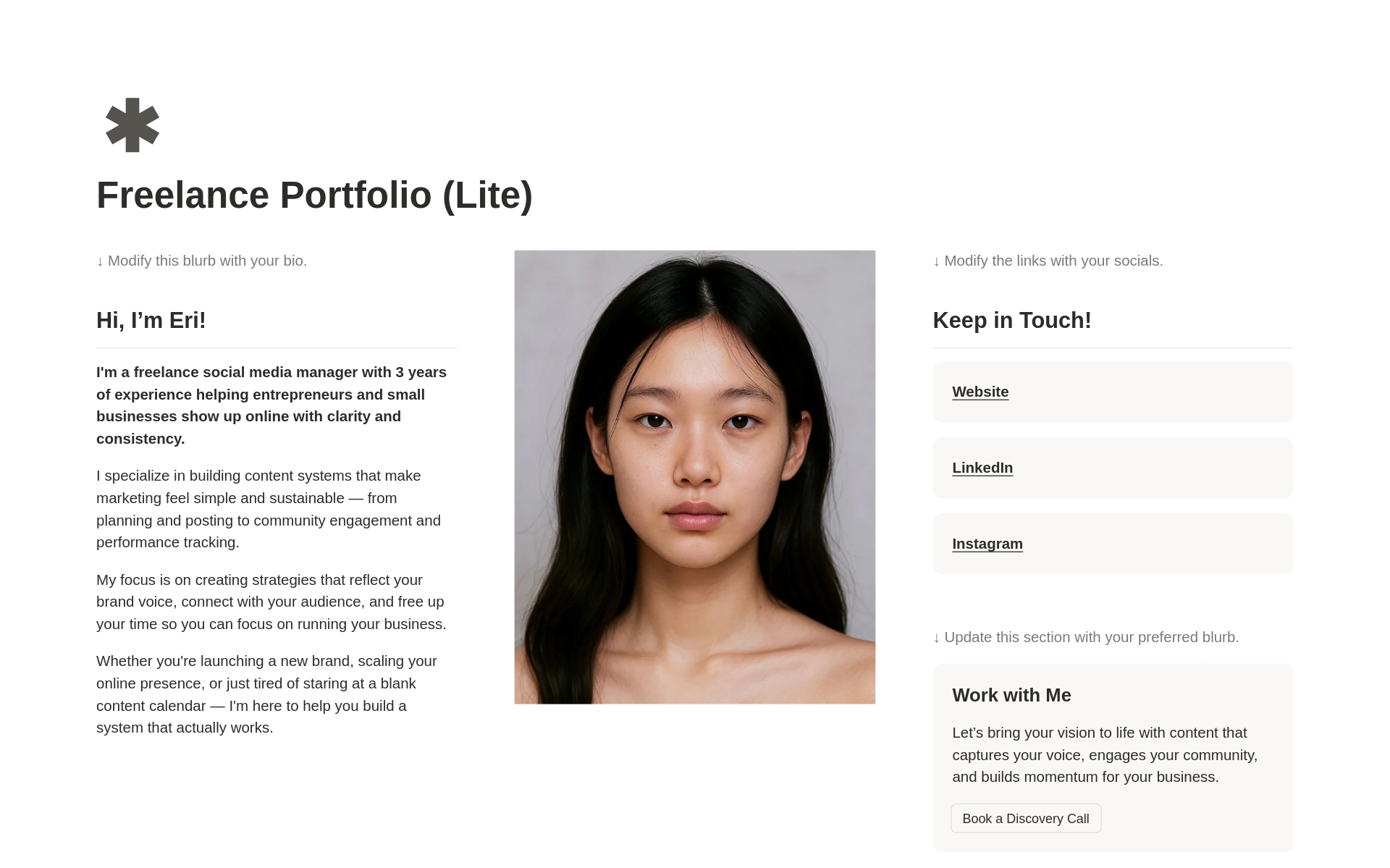
"Who are you and what do you do?" A short bio, a clear headline, and a photo give clients what they're looking for. They want to know there's a real person behind the work. Someone with a point of view and a specific kind of help to offer.
"Have you done work like mine?" This is where your projects come in. Three to six well-chosen examples with clear context (what you did, when, and what the outcome was) tells the whole story. A simple list with dates is more than enough to establish credibility.
"Can I trust you?" Testimonials do more heavy lifting here than anything else on your portfolio. One genuine quote from a happy client (something specific about the experience, not just "great to work with") is worth more than a dozen project screenshots.
"What do I do next?" This is the question most portfolios forget to answer clearly. A single, obvious call to action (Book a Discovery Call, Send me a message, Let's talk) removes the friction that causes interested clients to quietly close the tab and move on.
If your current portfolio answers all four questions clearly, you're in good shape. If it doesn't, that's exactly the gap the free template closes.
The part where most freelancers get stuck
Knowing what to include is one thing. Actually pulling it together is another.
The blank page problem is real, even for freelancers who've been doing this for years. You sit down to write your bio and suddenly you can't remember how to describe what you do. You go to pick your best projects and end up second-guessing everything. You wonder if you even have enough testimonials to include.
This is normal. The solution isn't to think harder. It's to start with a structure that already works. One where all the decisions about layout, sections, and flow have already been made for you.
What's already built into the template
Here's what you get when you grab the free Freelance Portfolio Lite:
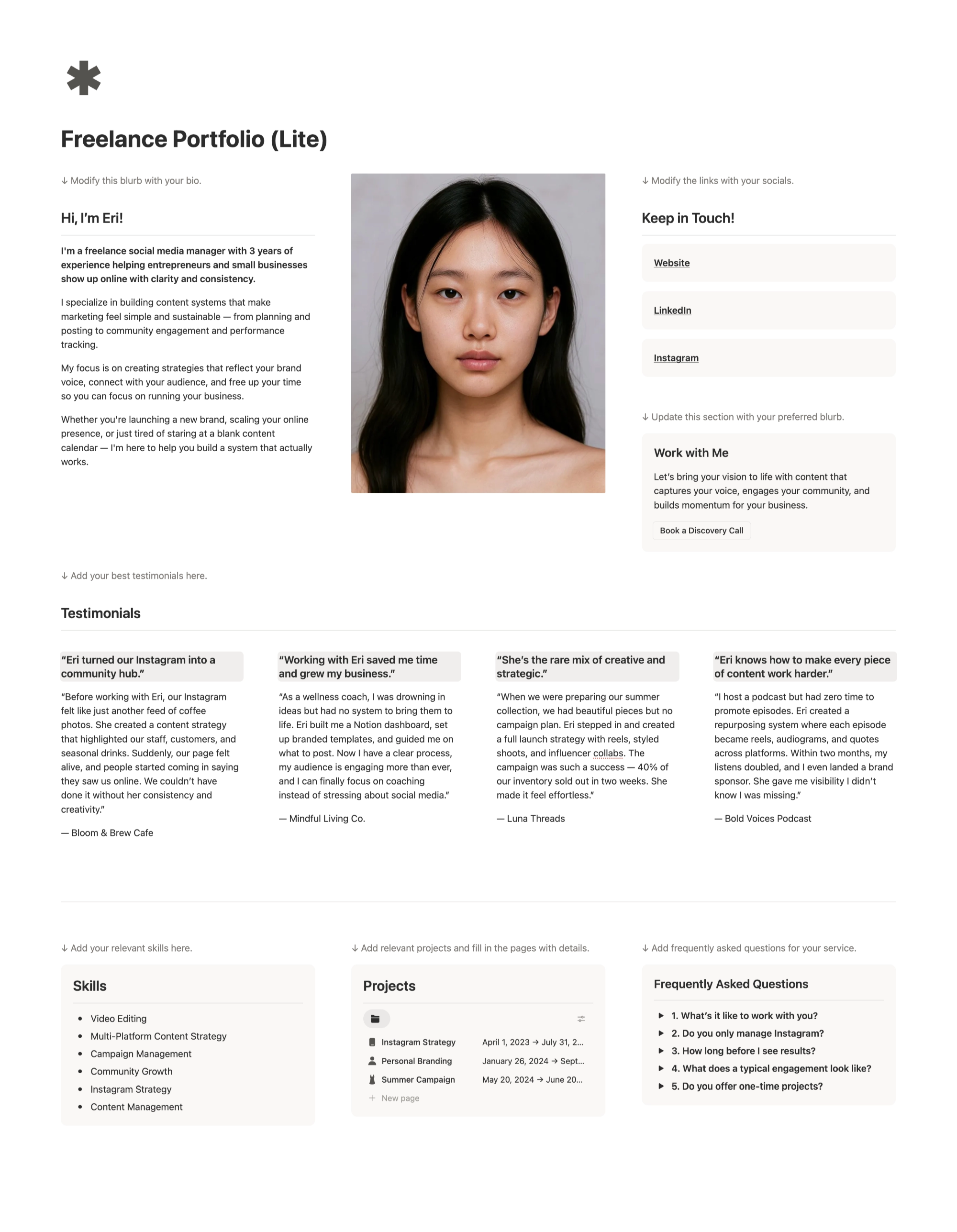
Freelance Portfolio Lite (Preview)
Bio + photo section with a clear space for your headline, your story, and your social links
"Work with Me" block with a dedicated section for your offer and a direct booking button
Testimonials layout with four columns, ready for your best client quotes
Skills list that's clean and scannable
Projects tracker to log your key projects with dates and details
FAQ section with space to answer the questions clients always ask before they reach out
Every section is there. Every decision has been made. All you do is fill it in.
Your one-hour plan
If you've got an hour this week, here's exactly how to use it:
Minutes 1 to 10: Grab the template and duplicate it into your workspace.
Minutes 10 to 25: Write your bio and headline. Don't overthink it. Describe what you do and who you help, like you'd explain it to a friend over coffee.
Minutes 25 to 40: Add three to six projects to the Projects tracker. Project name, what you did, the outcome. One or two sentences each is plenty.
Minutes 40 to 50: Drop in two to four testimonials. Check your inbox. You almost certainly have emails from happy clients that work as quotes, right now, as they are.
Minutes 50 to 58: Fill in your Skills list and FAQ. These take less time than you'd expect.
Minutes 58 to 60: Add your booking link or contact CTA. Publish.
From there, you have a portfolio ready to share.
The starting point you've been looking for
Your experience is already there. Your work is already done. Your happy clients have already said the things that make for great testimonials.
All that's missing is one clean, well-structured page that brings it all together and does the selling for you while you're busy doing the actual work.